Friday, June 29, 2012

Complain of Grain - Parshat Chukat

I was already thinking I would make tabouli this weekend before reading the weekly Portion, Parshat Chukat, and visiting my past relevant post. Go there to learn about this significant portion where Moses loses both of his siblings and is barred from entering the promised land.

The complaining Israelites can be found once again in this week's portion - lamenting the lack of water in the desert, as well as some of the very items that the spies recently reported could be found in the land they are headed to. "Why did you make us leave Egypt to bring us to this wretched place, a place with no grain or figs or vines or pomegranates? There isn't even water to drink!" Clearly, they are not the best bunch when it comes to delayed gratification. Soon after their whining, Moses hits a rock for water instead of speaking to it as God instructed and receives the crushing punishment of not being able to complete the 40 year journey with his nation.

This year I've got another grain recipe - one that actually pairs well with tabouli. It's based on a rather processed form of grain - Japanese Panko bread crumbs - that adds a great crunch to foods in frying or baking. The plain Panko readily takes on the flavors of herbs and spices and I often use olive oil to bind such a mixture together - mixing the dry Panko with the viscous oil reminds me of playing in the sand at the beach. Which is exactly where I'd like to spend the last few weeks of this wonderful pregnancy - under a beach umbrella, with my toes dug into some wet sand and my hands gripping a bottomless cup of chilled sparkling lemonade.


The Tabouli with the Panko Turkey


Couscous TabouliServes 4
 
1/2 tsp salt
2 tsp of olive oil, plus 1tbsp
3/4 cup of couscous
1 cup of water
1 pint cherry tomatoes, diced
1 cucumber, diced
2 tbsp fresh parsley, chopped
1 lemon
Salt and pepper to taste

In a medium saucepan, add the water, salt and 2 tsp oil and bring to a boil over high heat. Once it reaches a boil, stir in the couscous and remove from the heat. Let the couscous sit in the pot with a cover on for 5 minutes. Then fluff with a fork and refrigerate to cool completely.

Add the juice of the lemon, 1 tbsp of olive oil, salt and pepper to the the cooled couscous. Mix well, then add chopped tomatoes, cucumbers and parsley. Serve cold as a side dish or with tortilla chips as a snack.

Parsley and Pepper Panko Turkey
Adapted from two epicurious recipes (this one and this one). Serves 4

1 egg
2 tsp mustard
1 cup Panko (I can easily find Jeff Nathan's in my supermarket)
2 tbsp parsley, plus 1 tsp
1 tbsp olive oil
1 tsp cayenne pepper
1 tsp dried chili pepper
Salt and pepper
6 turkey breast cutlets

Pre heat the oven to 450 degrees.

In one bowl whisk the egg, mustard and 1 tsp of parsley - season with salt and pepper. In another bowl combine the Panko, parsley, olive oil and peppers. Season with salt and pepper and mix well. Spread the Panko mixture out on a plate.

Working with one turkey breast at a time, dip the cutlet into the egg mixture and then press onto the plate of Panko, being sure to coat the turkey well with Panko. The transfer to a glass baking dish and repeat with the remaining cutlets.

Bake for 25 minutes, uncovered, and enjoy.

Wednesday, June 20, 2012

Chosen Frozen - Parshat Korach

On the hottest first day of summer I can remember, all I can think of is ice cream. But since I haven't written here in a month I think I should start with some portion talk first - ice cream second.

This week we read Parshat Korach, chronicling the challenge to Moses' leadership by Korach and 250 leaders in the Israelite camp. They want to know what really qualifies Moses to lead the nation - if they have all been told they are holy people. Moses isn't sure how to handle this confrontation and asks God to sort it out for them. Things don't end well for Korach and his buddies since at that point Moses is clearly the most chosen of the chosen people.

Moses wonders why Korach and his cronies-  themselves leaders (being of the tribe of Levi he is among the group that serves in the Tabernacle) - are hungry for even more power. He tries to talk to some of the group one-on-one but they refuse to even come to a meeting with Moses. "Is it not enough that you brought us from a land flowing with milk and honey to have us die in the wilderness, that you would also hold it over us? We won't come." Talk about a mud-slinging campaign.

Actually, let's talk about milk and honey. I am a huge fan or milk in general, and specifically when it comes in a frozen form. My little babe in utero has certainly been demanding a lot of ice cream lately, and it got to be time to break out the ice cream maker. I had some leftover dulce de leche in a jar and went in search of an egg-free ice cream recipe to use it up. I wasn't sure if I should go for a vanilla ice cream swirled with the dulce de leche or incorporate the gooey sweet stuff right into the base of a batch. I was thrilled to stumble on a recipe that suggested the latter, had no eggs, used vanilla extract instead of beans and wouldn't keep me on my bare feet in the kitchen for too long : ) After enjoying the finished product with Sam and our friend Jason we all agreed it was the best dulce de leche ice cream we'd ever had. Take that Haagen-Dazs - I challenge your leadership! And because of the abundance of milk and the honey-like dulce de leche, this dish ties in with the milk and honey zinger from this week's portion.


Milk and Honey Ice Cream 
This is a dulce de leche ice cream recipe adapted from epicurious.com - it is egg free
and incredibly decadent but not overly sweet
. The recipes calls for pre-made dulce de leche, making your summer that much more relaxed.

2 cups of heavy cream (I love a Boston local brand High Lawn)
1 cup milk
1.5 cups of prepared dulce de leche (I used La Salamnadra)
1/8 tsp vanilla extract

Boil heavy cream and milk in a sauce-pan over a medium flame.

Remove from heat and stir in vanilla, then whisk in the dulce de leche until it has dissolved.

Chill this mixture in a bowl in the fridge, freezer or in the counter over another bowl of
ice - chill completely before pouring into an ice cream maker or it will not freeze!!

Freeze in the ice cream maker according to its directions.

Transfer ice cream to an airtight container and put in freezer to harden for an hour - if you can wait that long! Or just start enjoying right away.

Past Recipes for Parshat Korach
Chocolate Almond Biscotti
Rosemary and Chili Spiced Almonds

Friday, May 25, 2012

Happy Shavuot


This year I didn't have the energy to whip up my own cheesecake (such as this key lime version I've loved in the past) but am excited to devour this four-flavored cheesecake by David's Cookie's that we picked up at Costco.  Each slice features some form of decadent chocolate - truffle, peanut butter, chocolate chip, and I'm contemplating how good of a sharer I am going to be this weekend.

Here is a round up of some great dairy dishes for you to prepare for the pilgrimage holiday of Shavuot, commemorating the end of the barley harvest, the beginning of the wheat harvest and the receiving of the Torah at Sinai.


Thursday, March 29, 2012

A Feast for a Priest - Parshat Tzav

We're onto the second portion, Parshat Tzav, in the second book of the Torah - Leviticus (or Vayikra). The portion starts off with a listing of several different "korbanot" Hebrew for offerings/sacrifices. Each is brought by a member of the nation of Israel, upon a different life occasion to the Temple, where the priest offers it on their behalf. The occasions include: a sin offering, a guilt offering, an offering of thanksgiving, and a just because offering. 

It's certainly hard for us modern readers to relate to Temple offerings, but seeing this list of times in one's life when you might be driven to bring an offering could resemble a list of times in your life when you might bring someone a bouquet of flowers (I heard this idea from my teacher Alex Israel) - you send roses to tell someone you love them, bring a colorful bouquet to someone in the hospital to wish them well, or patch up a relationship misstep. These gifts are all symbolic gestures that express emotions you are feeling, and in Temple times, sacrificial offerings served the same purpose.

They also serve a more practical purpose - the leftovers feed the Priests who work in the Temple. A system is set up for Aron and his sons, and all priests who come after them, whereby they eat the leftovers that don't get burnt during the process of offering to God. Three of the offerings have a special system set up - the Cohen (priest) that helps an individual bring a guilt offering, a burnt offering or a baked meal offering gets to eat the leftovers from that one all to himself (in the case of the burnt offering he just gets to keep the skin). With all the other offerings - including the bread, oil and wine that accompany many of the sacrifices - they get divided up among all of the priests serving in the Temple at any given time. It's a sound system.


The way that the meat of all the offerings was cooked was by fire on the altar, which is  kept burning continuously. Every morning the Cohen dresses in his linen garments and gathers the ashes that the burnt offerings have been reduced to and places them beside the altar, he then changes his clothes to a clean outfit in order to carry the ashes outside of the camp to a clean place. 

While you may not want to keep your stove on all the time or change into clean clothes just for cooking - you too can enjoy amazing meat. I want to share some of the meat I have been cooking lately for Grow and Behold and invite you to pop over there for some great recipes like London Broil with Avocado Relish or Porter Pomegranate Roast or Root Beer Flanken (if these make your mouth water, think about using the Double Portion reader discount on their site for a Passover order - "DBLP5" for 5% off an order over $50 and "DBLP10" for 10% off over $100).

Happy meat cooking and eating and almost happy Passover!


Passover


Perhaps you can find a way to adapt this Baby Moses woven squash basket tart for Passover - I just might try.
Also check out the full Recipe Index for plenty of Passover friendly salads, sides and main dishes!

Sunday, March 4, 2012

Empanadas and Pictures from Israel - Parshat Tezaveh Part II

These Empanadas are delicious when served with some cholula hot sauce and a squeeze of fresh lime juice. Pictures as promised.


And while we're on eye candy - here are some culinary shots from my Israel trip (if you're not hungry yet, you will be shortly).

The assembly line at Burgers Bar - note the ketchup smiley face

Wine tasting in the North - I didn't actually taste much

Wild flower lemon Herbal Tea in Jerusalem

First Shwarma of the trip

Towering meringues in Tel Aviv's outdoor market

Trays of steaming "Marzipan" ruggalach (I brought home 2 boxes for Sam)

I took all of these pictures on my iphone!

Dried kiwi! Tel Aviv market

Sam would have loved this shop - fishy fish and olives

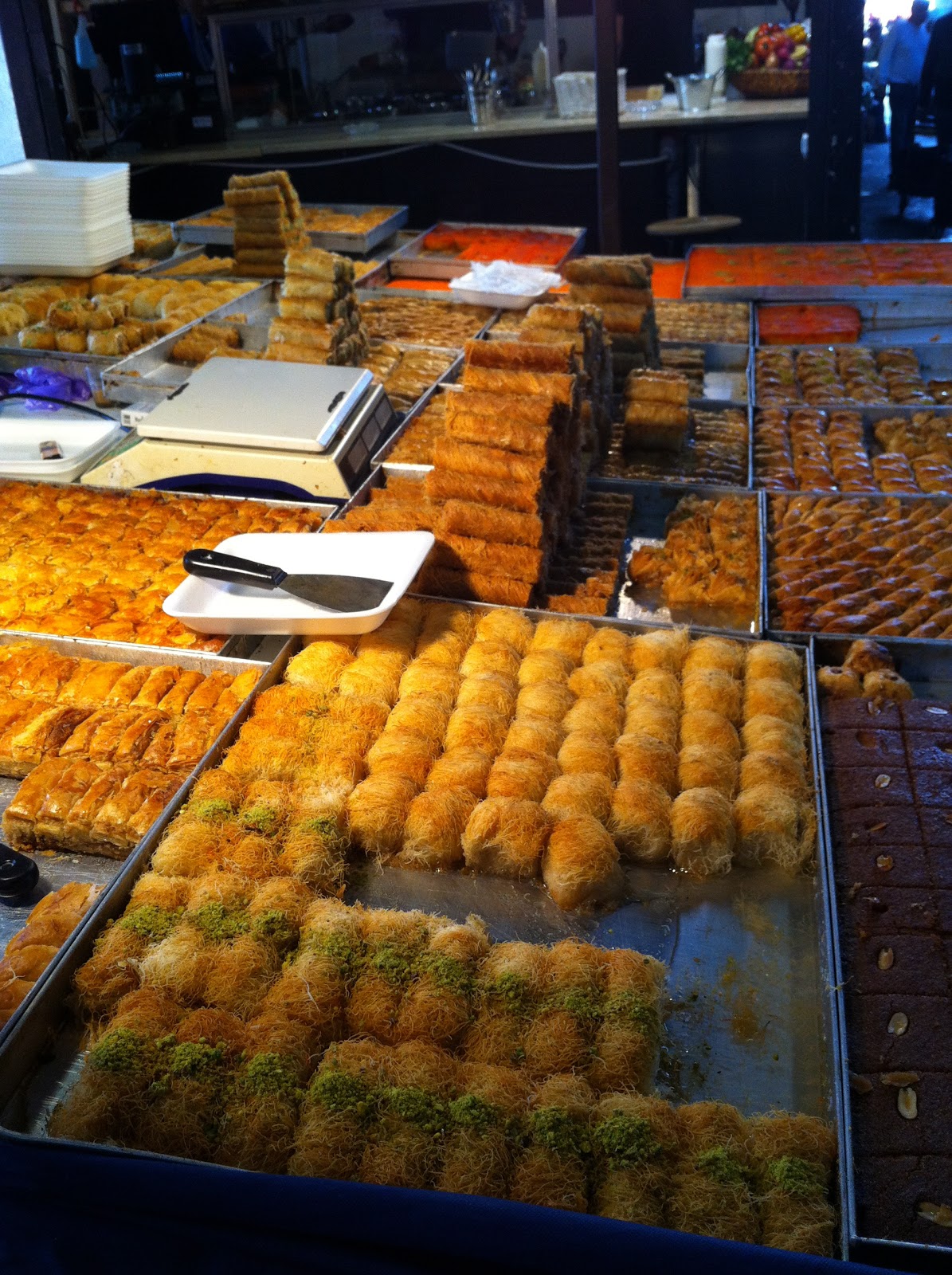
Quite the assortment of Baklava

Mixed grill

Mixed grill appears with onions and hummus in my pita!

Nana, or fresh mint leaf, tea

Halva at the outdoor market in Jerusalem

Delicious fruit in Jerusalem's outdoor market

Friday, March 2, 2012

Hello Again - Parshat Tezaveh

It's been a while since I wrote here. Wow, as in two-months-while.

There were several times I attempted to return (I have the unpublished draft posts to prove it), but then lost steam. It started out with some morning sickness, which lead to all day sickness and a general revulsion for food preparation, finding myself completely exhausted at 8 pm, expending my energy on keeping a certain secret, then on sharing that secret with some people before they found out online.

If you're a sharp reader, and I know you are, you may have surmised that Sam and I are expecting! It's a nice piece of news to be able to share here.

I'm feeling good now in my fourth month but for the first few months I wanted nothing to do with my kitchen. Sam valiantly took over our lunch preparations (I mostly wanted cheddar cheese on whole wheat bread with mustard) as well as dinner (mac and cheese!) and breakfast (hold the coffee, way to pungent). Then I was whisked away to Israel for 2 weeks in January (just as my queasiness was subsiding) to lead a birthright trip for young adults from Boston. But now, finally, I'm here to tell you that there will hopefully be another little portion in our lives come the end of July.

Well it's good to be back. So let's get to the weekly portion and the recipe! The last several portions in the Torah have included the instructions for setting up the Tabernacle - how to build it and decorate it. In this week's portion, Parshat Tezaveh, we get the step by step process on how to inaugurate it - and one important piece of the inauguration is initiating those who will be working there. 

Aaron and his sons will be presiding as priests in this holy, portable building. They are given special garments for the job which are described in rich detail (tunics, pants, smocks, sashes, and jewelry in purple, gold, crimson, teal - hello project runway challenge!). But then, to a clothing designer's horror, they get their apparel all mussed up during the rather messy ritualistic inauguration.

First a young bull and two rams are placed in a basket along with freshly baked olive-oil-bread. Aron and his sons are led to the Tabernacle's entrance - or as it is called here "the tent of meeting" - for a good washing. Then they are dressed up in their fine outfits, only to be doused in anointing oil. But that makes them ready to begin the steps of offering their first sacrifices.

They begin by ritually slaughtering the bull from the basket - whose blood they sprinkle on the corners of the alter and the bull gets burned as a sin offering. Next, they slaughter the rams and offer them to God along with the bread from the basket (they get to eat some of this combination too). There is even more use of the ram's blood than the bull's blood. They fling the ram's blood on the alter, smear it on their ears and toes (weird!) and sprinkle some on their clothes. This act isn't seen as defiling or soiling the clothes, rather it is the process that makes the clothes holy. And these holy vestments will be passed down from father to son as each generation takes over the service in the temple/tabernacle. Likely to lead to a hefty dry cleaning bill.

That beef and bread must have made a great combo and it got me thinking of a way to enjoy both at once as a finger food, with minimal mess. While it would have been prohibited for non-priests to eat the slaughtered meat and specially baked bread during the times of the priests, it's perfectly okay for us to make our own beef empanadas in our home kitchens.

Beef Empanadas
Adapted from a Real Simple Recipe (Pictures will be added later today!)

1 tbsp olive oil
1/2 red onion, chopped
2 cloves garlic, chopped
1/2 lb ground beef
2 tbsp tomato paste
1/2 tsp cinnamon
1/2 tsp allspice
1/2 tsp salt
1/4 tsp pepper
1/3 cup of dried cranberries
2 store bought pareve pie crusts
1 egg, beaten

Heat oven to 375 degrees.

Heat the olive oil in a large skillet over medium-high heat. Add the onion and garlic and saute for 5 minutes. Add the beef and break it up into small chunks with a spoon while stirring. Add the tomato paste and spices and saute for another two minutes, stirring until the beef is no longer pink. Stir in the dried cranberries.

Cut the pie dough into 2 inch circles using a cup or a cookie cutter. Divide the beef mixture amongst the circles. Brush the edges of the dough with water and fold each circle in half, crimping the edges down with a fork.

Place the formed empanadas on a baking sheet and brush with the egg. Bake for 20-25 minutes until light brown.

Purim
I'm wishing everyone a very festive Purim next Wednesday night - click here for my hamantashen recipe (the secret ingredient is orange juice!)- a great way to enhance your celebrations.

Wednesday, December 21, 2011

Surprise - Parshat Miketz

I love surprise parties, but never have I ever been to one as prolonged as the one in this week's portion, Parshat Miketz. Joseph’s brothers come to Egypt seeking relief from the famine, and Joseph, who is in charge of food rationing, recognizes them immediately. But they don’t recognize him. It will be quite a while before he reveals his identity to them - hey it’s me brother Joe.

Joseph first wants to see if they have changed since they threw him in the pit and devises an elaborate plan to test their loyalty to one another. He accuses them of being spies and says that the only way they can prove otherwise is to leave their brother Shimon behind as collateral and bring their brother Benjamin back to Egypt.

With a heavy heart the brothers return to their father with bags of grain. Jacob is livid when he learns that they want to bring his youngest and beloved son Benjamin back to Egypt - and they are all upset when they discover that the money they paid for the grain was returned to their sacks. Not that they don't like free things, but they don't want to get accused of stealing on top of the spying accusation.

While their father tries to stall their return to Egypt, the provisions eventually run out and they have no choice but to return.  Judah promises to be personally responsible for Benjamin’s welfare and Jacob consent to send Benjamin with them. Jacob also sends them with double the money they first went with as well as some gifts to win Joseph’s favor, including honey, pistachio nuts and almonds.


Once back in Egypt the brothers get invited to Joseph’s home for a meal. This makes them a little uneasy - wondering if they are walking into a trap that is meant to be retribution for not paying for their goods. But Joseph’s butler assures them that all has been paid for and is well. Joseph is so overwhelmed to be united with his little brother Benjamin and to hear good news of his father’s health that he almost spills the surprise then and there. But he has yet to be convinced of any change in the brothers so he holds off for a bit longer.

In the final phase of his plan Joseph has his butler slip an expensive goblet into Benjamin’s bag and when the brothers leave Egypt the next morning his servants chase after them and accuse them of stealing their master’s cup. Of course the brothers deny any wrong doing, but when the cup is discovered in the bag of Benjamin they're all dragged back to Joseph’s home where he confronts them again.

Judah takes responsibility for the crime and pleads with Joseph not to hold one of them responsible but to detain them as an entire group. Joseph pushes back and says he is not that tyrannical, he will only exact punishment on Benjamin since he stole the cup. The portion ends with a cliff hanger - Judah's response doesn't come until next week’s portion. So you'll have to wait a week to find out how Joseph finally does reveal his identity : )

The gifts that the brothers bring are the essential ingredients for nougat - a sweet, creamy, fluffy, chewy white confection that can easily be made into airy ice cream.

Nougat Ice Cream with Honey, Pistachios and Almonds
This dish, adapted from this Epicurious recipe, is more like a fluffy frozen confection than a solid ice cream. Picture less dense, less sticky marshmallow fluff studded with toasted nuts. It is made in four easy steps and doesn't even require an ice cream maker (only 4 hours of patience while it hardens in your freezer).

2 egg whites
Pinch of salt
1/2 cup of sliced almonds
1/2 cup of unsalted, shelled pistachios
3 tbsp honey
1/4 cup sugar
1/4 cup of water
1 cup heavy whipping cream

Beat egg whites with a pinch of salt in a stand mixer until soft peaks form.

soft peaks

Meanwhile, in a small saucepan simmer the honey, sugar and water. Stir until the sugar dissolves and then boil the liquid for 1 minute.


Add to the egg whites slowly while beating. Continue to beat for 4 minutes until stiff peaks form (it should look like light weight marshmallow fluff).


Toast the nuts over a medium flame for about a minute, or until fragrant. Allow to cool and chop them up.

Put the beaten egg whites and honey into a large rectangular baking dish. In the stand mixer, beat the whipping cream into soft peaks - pay attention to it's progress and try not to over beat it or your ice cream will be crumbly.

Fold the beaten cream into the beaten egg whites and gently incorporate the chopped nuts.

Evenly spread the confection out in the baking dish. Cover and put in the freezer for 4 hours before enjoying.


Chanukah

Happy First day of Chanukah! I hope you all have occasion to celebrate Jewish Pride, religious freedom, fighting for what you believe in, and gratitude.

I’m also very excited about eating a lot of latkas - including these:
Butternut Squash Latkas
Healthy Vegetable Filled Latkas
Sweet Potato Curry Latkas
Potato Latkas topped with Pomegranate seeds and Greek Yogurt (Ironic?)And...

Beet Latkas with Horseradish Creme Fraiche

1 potato, peeled
2 beets, peeled
1  small onion, peeled
1/3 cup of flour
1 egg
Salt and pepper to taste
1/4 cup of olive oil
1/2 cup of creme fraiche
1/8 cup of beet horseradish

Slice the potato in two and feed into a food processor with a shredder disc attachment. Do the same with the beets and onion. Drain the grated vegetables in a large swath of cheese cloth and squeeze out as much moisture as you can.

Put the drained vegetables in a bowl and add the egg, flour, salt and pepper. Form the latkas by heaping tablespoons and flatten them out using the palm of your hand.

Heat the olive oil in a small nonstick pan over high heat. Place 2-4 latkas at a time in the pan and fry them for 2-3 minutes on each side- the oil should be hot enough that it turns the latkas a nice brown, but the oil never smokes. Drain the latkas on paper towels.

Mix the horseradish and creme fraiche and serve over the latkas.


What are your favorite latka and topping combinations?


Past Recipes for Parshat Miketz
Corn Bread
Wheat Berry Salad with Onions and Citrus
Lean Mean Spicy Meatloaf

Chanukah Recipes
Potato Latkas with Red and Green Onions and Apple
Suggested Dairy Chanukah Menus


This post is linked to Real Food Digest Hanukkah 2011 Blog Carnival